This post is maintained by Bytebase, an open-source database DevSecOps tool that can manage both Neon and Supabase (it's PG after all). We update the post every year.
| Update History | Comment |
|---|---|
| 2024/07/02 | Initial version. |
| 2025/04/28 | Updated for 2025. Improved pricing |
| 2025/05/19 | Add agentic workload |
| 2026/03/25 | Updated for 2026. Pricing, Neon acquisition, features |
Neon is a serverless Postgres database; Supabase is a backend-as-a-service platform built on Postgres. Choose Neon if you want a standalone, scale-to-zero Postgres with instant branching. Choose Supabase if you want a full-stack platform with auth, storage, realtime, and edge functions included alongside your database.
Besides the typical Postgres service providers like AWS RDS, Google Cloud SQL, DigitalOcean Managed Databases, Neon and Supabase are the two modern Postgres service providers.
Databricks completed its acquisition of Neon in 2025 for ~$1 billion, making Neon the Postgres foundation for Databricks' agentic AI platform. Neon continues to operate as an independent product with its own pricing and brand (now at neon.com).
On the surface, Neon and Supabase are different products. Neon is a database service. Supabase is a BaaS (Backend-as-a-Service) and Postgres is one of its included services.
They are comparable because they both offer a developer-friendly, scalable Postgres service. In the agentic era, each aims to become the de-facto database for agentic workloads.
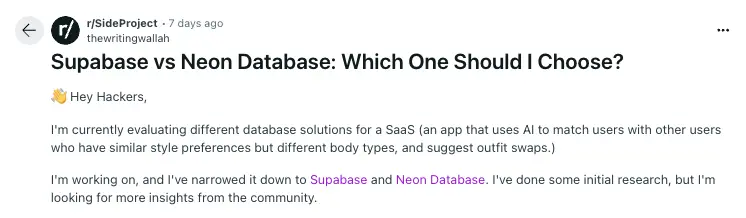
And their websites certainly don't help the choice easier.

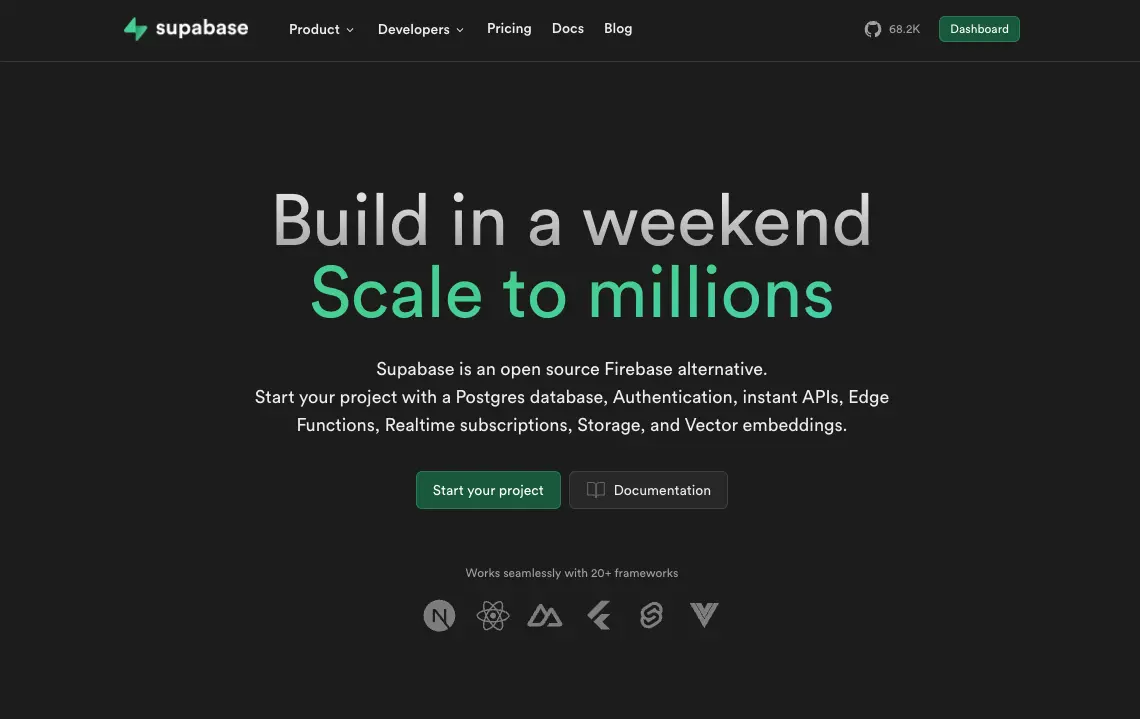
At Bytebase, we are Postgres fans. Our founders build Google Cloud SQL for PostgreSQL and Bytebase also chooses Postgres to store its own metadata. Below we compare Neon and Supabase from the following dimensions:
- Architecture
- Compatibility
- Branching
- Agentic Workload
- Integration
- Compliance
- Open Source
- Pricing
- FAQ
Architecture
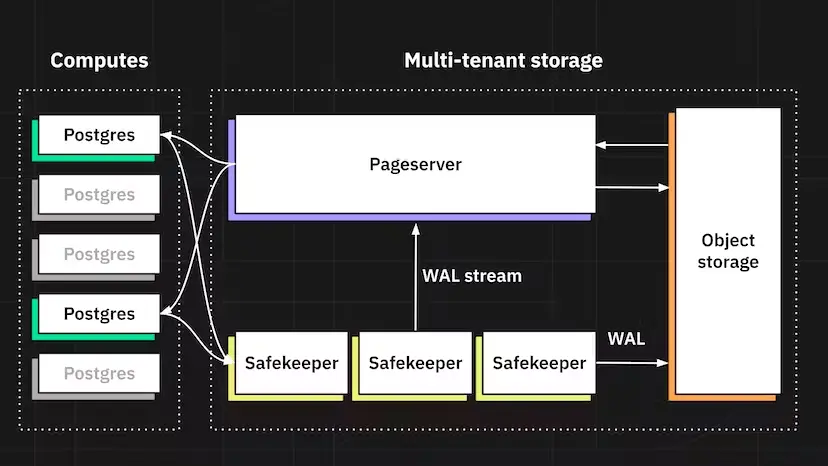
Neon is a shared-storage architecture. It separates the compute and storage. The compute part is just normal Postgres server, the storage part is a custom-built multi-tenant storage system shared by all Postgres compute nodes.
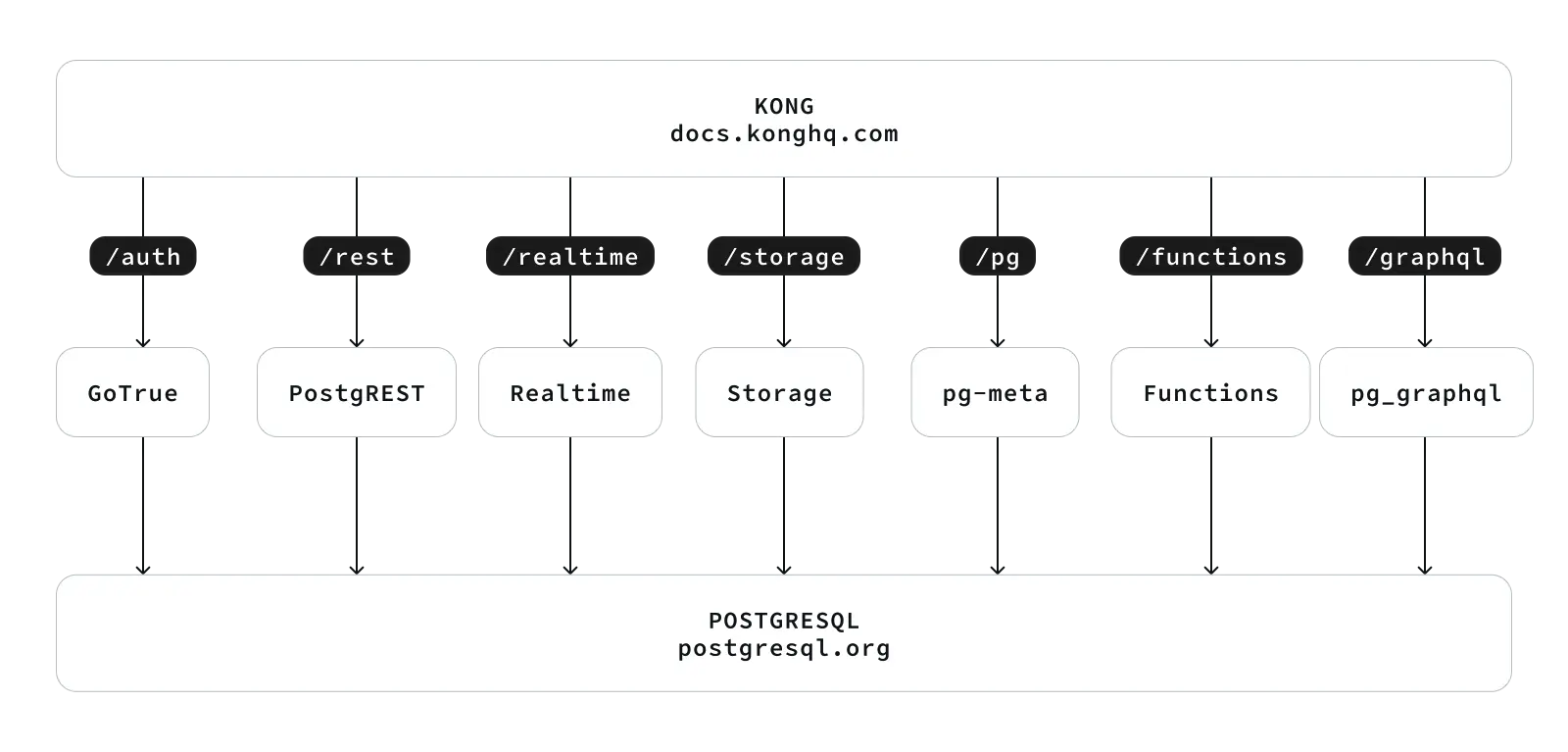
Supabase is a battery-included Postgres platform. It uses vanilla Postgres as the core and augments the database with various middlewares.
Compatibility
Neon is mostly compatible with vanilla Postgres whereas Supabase is a dedicated vanilla Postgres instance. They both bear the limitations of a hosted database service (e.g. no superuser).
Branching
Both Neon and Supabase are targeting developers, and they both offer a branching feature.
Neon purpose-built paging layer has copy-on-write (CoW), which enables database cloning instantaneous and cost-effective.
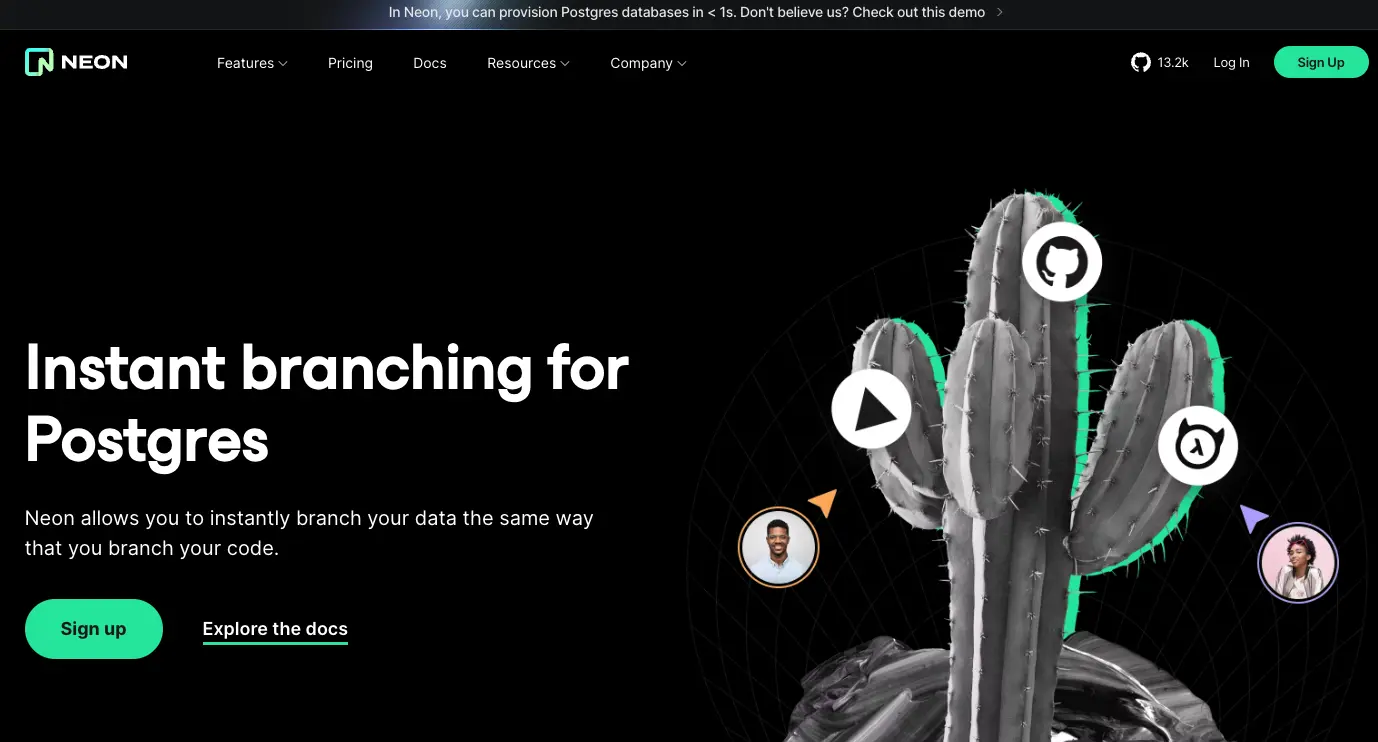
Supabase branching integrates with Git repository. It provisions a new empty database, runs the migration script and initializes the seed data.
Overall, Neon's instant branch cloning is closer to the Git semantics.
Agentic Workload
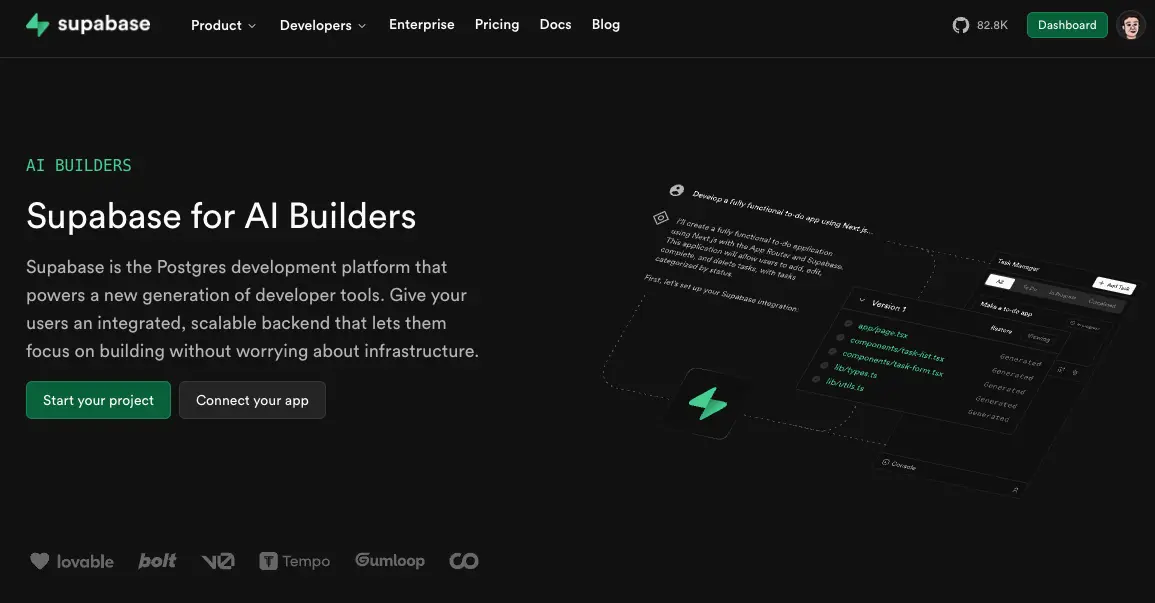
Both Neon and Supabase highlight AI agents as a primary use case.
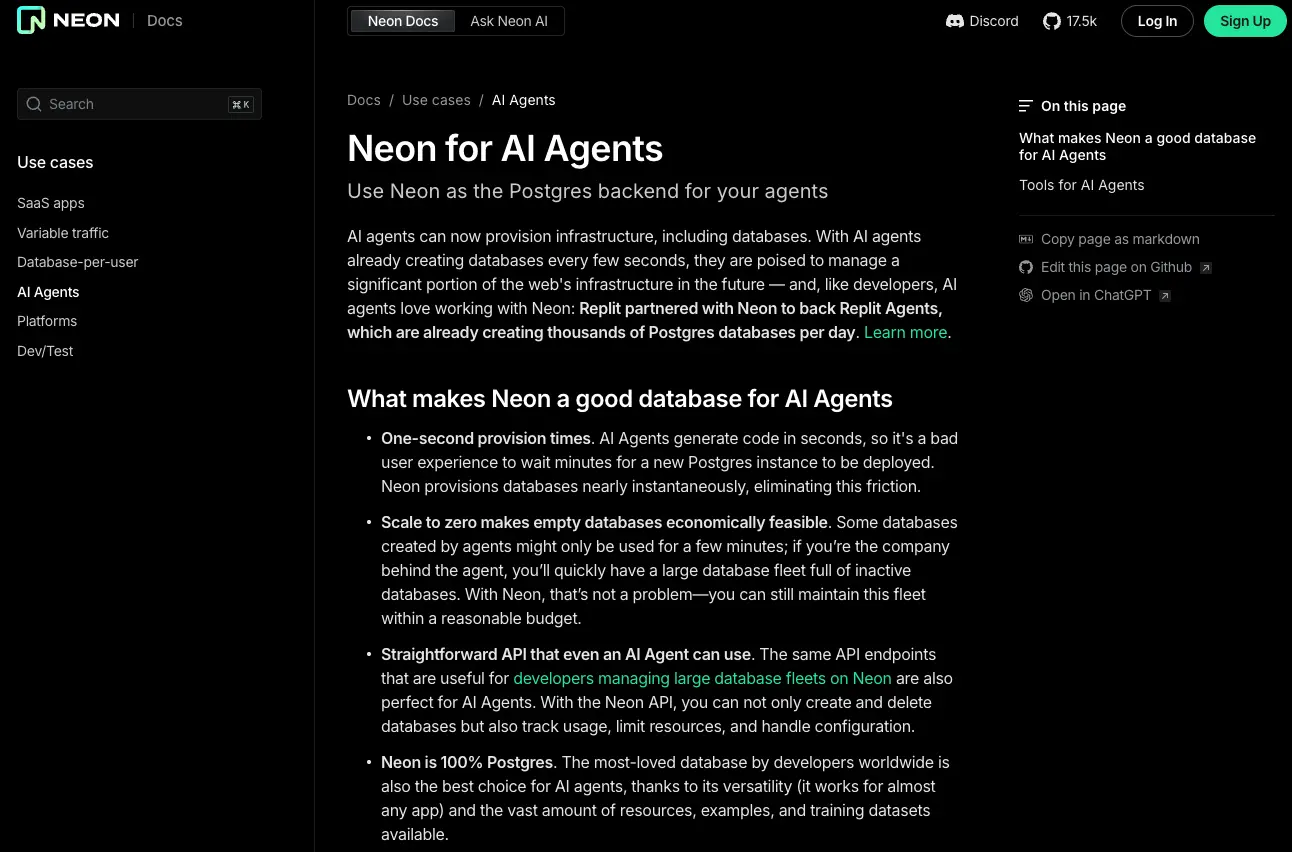
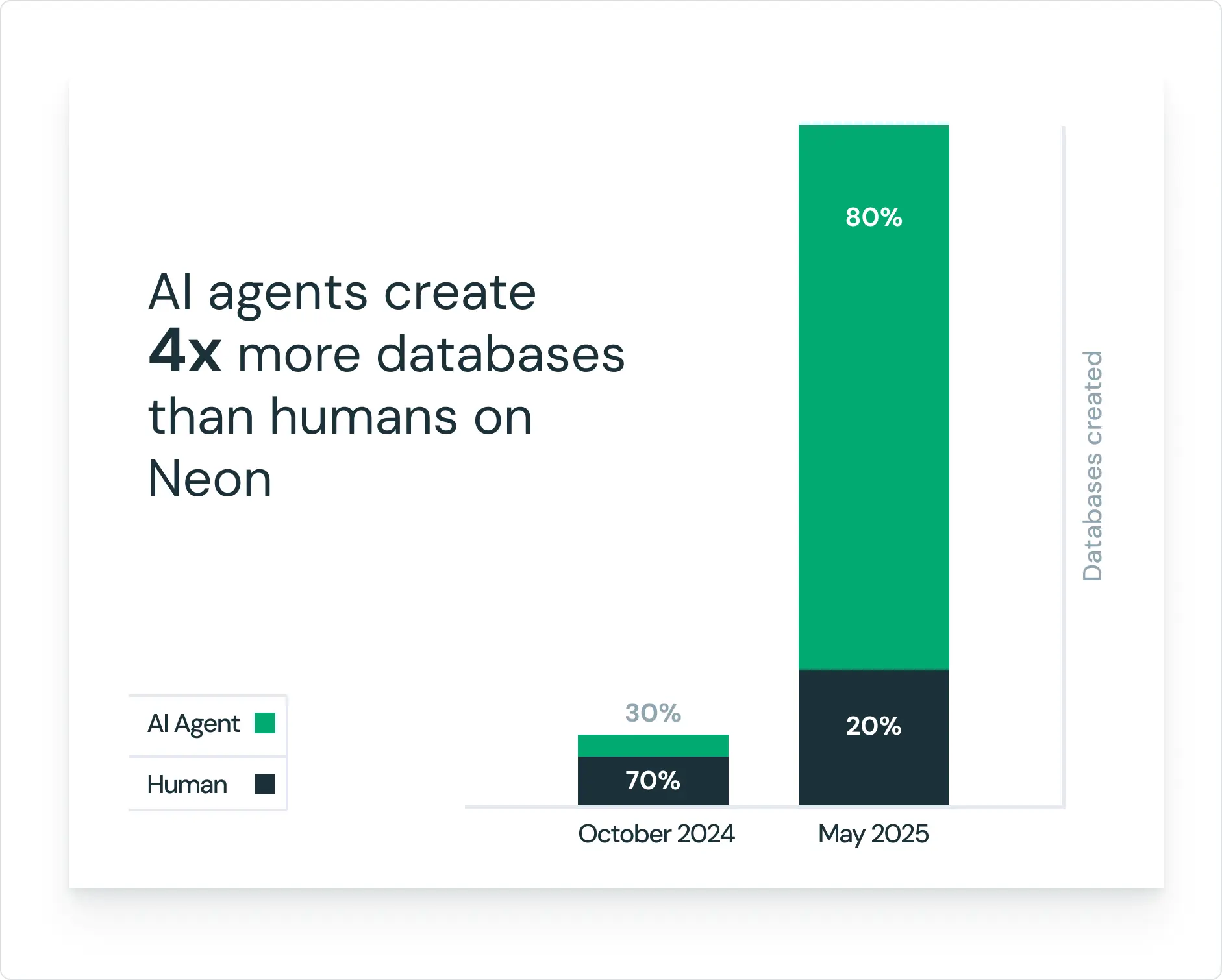
The Databricks acquisition confirmed that Neon’s architecture — instant provisioning, scale-to-zero, and per-agent database branching — is purpose-built for agentic workloads.
Neon now offers a unified neon init command that configures both its MCP Server and VS Code Extension in one step, giving AI coding assistants like Cursor direct database access. Neon Auth also branches automatically alongside database branches, so preview environments get isolated auth state.
Supabase is responding with its own agentic play. BKND joined Supabase to build a Lite offering specifically for agentic workloads. AI app builders such as Lovable and bolt continue to adopt Supabase as their default backend.
Overall, Neon’s scale-to-zero and instant branching make it better suited for agents that spin up many short-lived databases. Supabase’s full-stack platform is a better fit for AI app builders who need auth, storage, and realtime alongside the database.
Integration
Neon integrates with application platforms such as Vercel to provide a high-fidelity preview environment. The Vercel integration now automatically provisions Neon Auth on preview branches, so authentication works out of the box in preview deployments. Neon is also now part of the Databricks ecosystem, opening up integrations with Databricks' data and AI tools.
Supabase is an application platform by itself and boasts a wide variety of integrations.
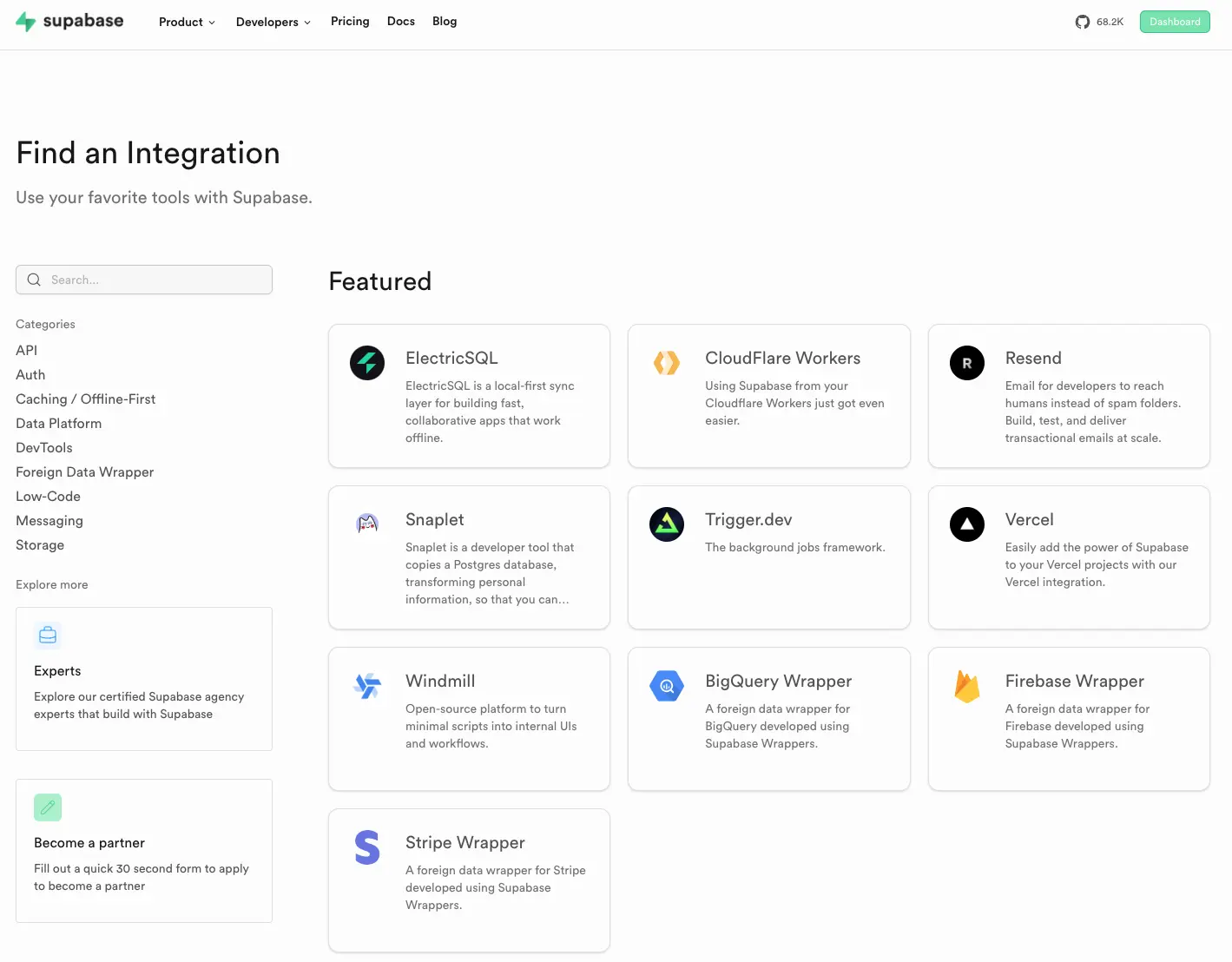
Recent additions include a one-click Stripe Sync Engine integration (query customers, subscriptions, and invoices with SQL) and the Hydra-powered Supabase Warehouse for analytics workloads. There are also quite a few SaaS boilerplates built on Supabase.
Compliance
Both Neon and Supabase achieve SOC 2 Type 2. Both now offer HIPAA compliance — Neon added HIPAA eligibility on its Scale plan after the Databricks acquisition.
Open Source
Neon open sources its entire database codebase under Apache-2.0 license.
Supabase also open sources its entire platform under Apache-2.0 license.
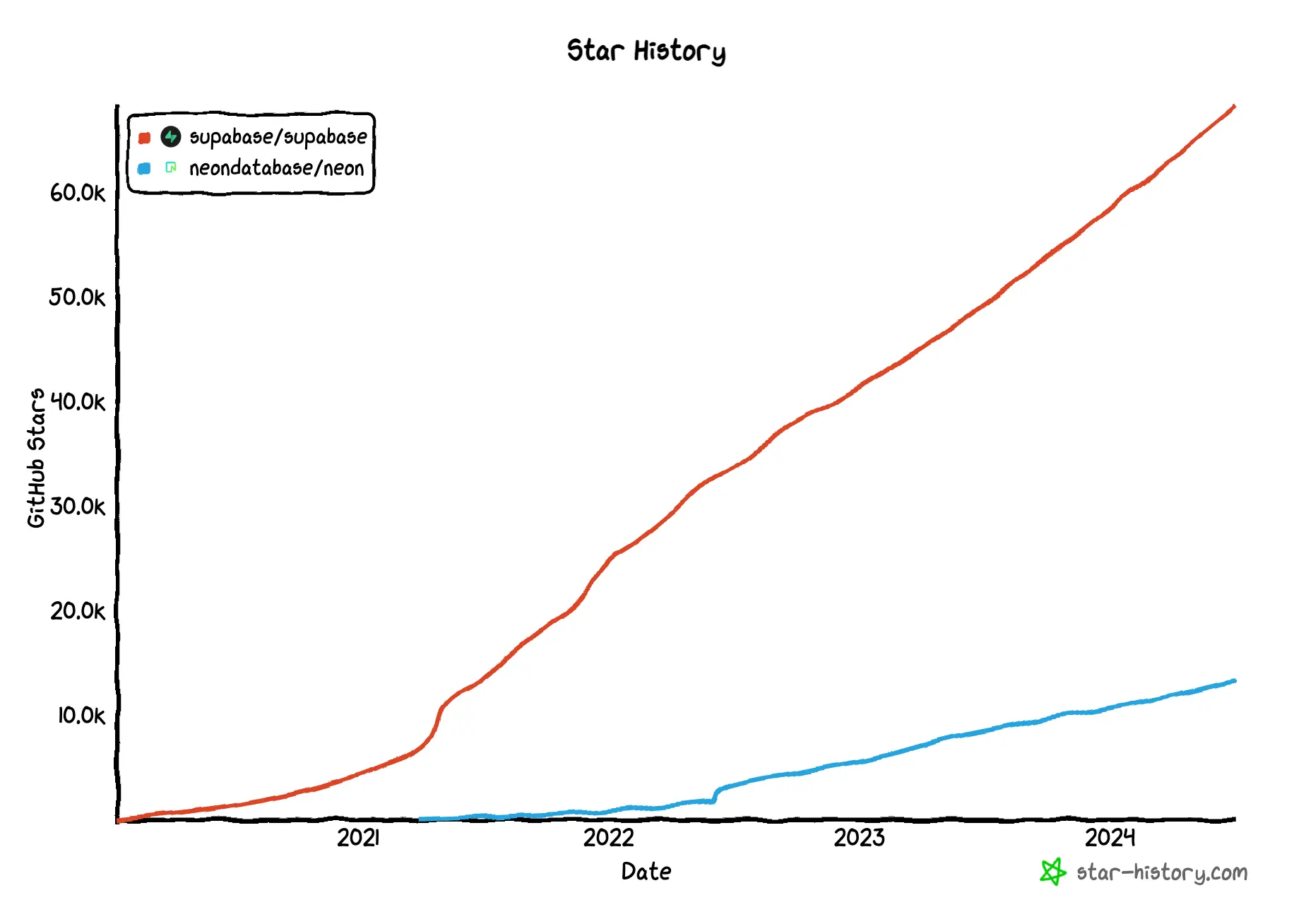
Supabase is one of the most popular repositories on GitHub, while Neon's star growth is also impressive.
Pricing
Both Neon and Supabase offer a free tier and usage-based pricing, but their models differ significantly.
Neon — Usage-Based (Pay for What You Use)
Post-Databricks acquisition, Neon slashed prices: storage dropped from $1.75 to $0.35 per GB-month and compute costs fell ~25%.
| Plan | Monthly Cost | Included Compute | Compute Rate | Storage | Key Limits |
|---|---|---|---|---|---|
| Free | $0 | 100 CU-hours/project | N/A | 0.5 GB/project | Up to 2 CU, scale-to-zero |
| Launch | Usage-based (~$15 typical) | - | $0.106/CU-hour | $0.35/GB-month | Up to 16 CU, 100 projects |
| Scale | Usage-based (~$701 typical) | - | $0.222/CU-hour | $0.35/GB-month | Up to 56 CU, SLA, SOC 2, HIPAA |
| Business | Custom | Custom | Custom | Custom | Dedicated infra, premium support |
Neon's scale-to-zero means you pay nothing when the database is idle — a significant advantage for dev/test environments and agentic workloads that spin up many short-lived databases.
Supabase — Platform Fee + Usage
Supabase charges a platform subscription fee plus usage-based overages.
| Plan | Monthly Cost | Database | Auth MAU | Storage | Key Features |
|---|---|---|---|---|---|
| Free | $0 | 500 MB | 50K | 1 GB | 2 projects, paused after 7 days idle |
| Pro | $25 + usage | 8 GB included | 100K | 100 GB | $10 compute credit, spend cap |
| Team | $599 + usage | 8 GB included | 100K | 100 GB | SSO, SOC 2, 28-day logs |
| Enterprise | Custom | Custom | Custom | Custom | SLA, 24/7 support, BYO cloud |
Supabase's pricing includes auth, storage, edge functions, and realtime — all bundled into the platform fee. If you need these services, the value proposition is strong compared to assembling them separately.
Neon or Supabase
If you want a standalone Postgres database with serverless scaling, instant branching, and scale-to-zero, Neon is the stronger choice. It is especially well-suited for agentic workloads and development workflows that benefit from lightweight, ephemeral databases. The Databricks acquisition gives it additional backing for long-term investment.
If you are building a full-stack application and want auth, file storage, realtime subscriptions, and edge functions included alongside your database, Supabase provides a more complete platform. Its dashboard, growing integration ecosystem, and active community make it a productive choice for shipping quickly.
FAQ
Is Neon still independent after the Databricks acquisition?
Yes. Neon continues to operate as an independent product with its own pricing, brand, and roadmap. It is now available at neon.com (previously neon.tech).
Can I self-host Neon or Supabase?
Both are open source under Apache 2.0. Neon and Supabase can be self-hosted, though the managed services include features (HA, backups, monitoring) that require additional setup when self-hosting.
Which is cheaper for a small project?
Both offer generous free tiers. Neon's free plan includes 100 CU-hours and 0.5 GB storage per project. Supabase's free plan includes 500 MB database, 50K MAU, and 1 GB file storage. For hobby projects, both are effectively free. As you scale, Neon's usage-based model can be cheaper if your workload is bursty (scale-to-zero saves cost during idle periods), while Supabase's bundled platform can be cheaper if you would otherwise pay separately for auth, storage, and realtime.
Which has better performance?
Both run vanilla Postgres, so raw query performance is comparable. Neon's shared-storage architecture adds a small latency overhead on cold starts but enables instant branching and scale-to-zero. Supabase runs dedicated Postgres instances with no cold-start penalty. For latency-sensitive production workloads, Supabase's always-on compute may have a slight edge; for workloads with variable traffic, Neon's autoscaling can be more efficient.